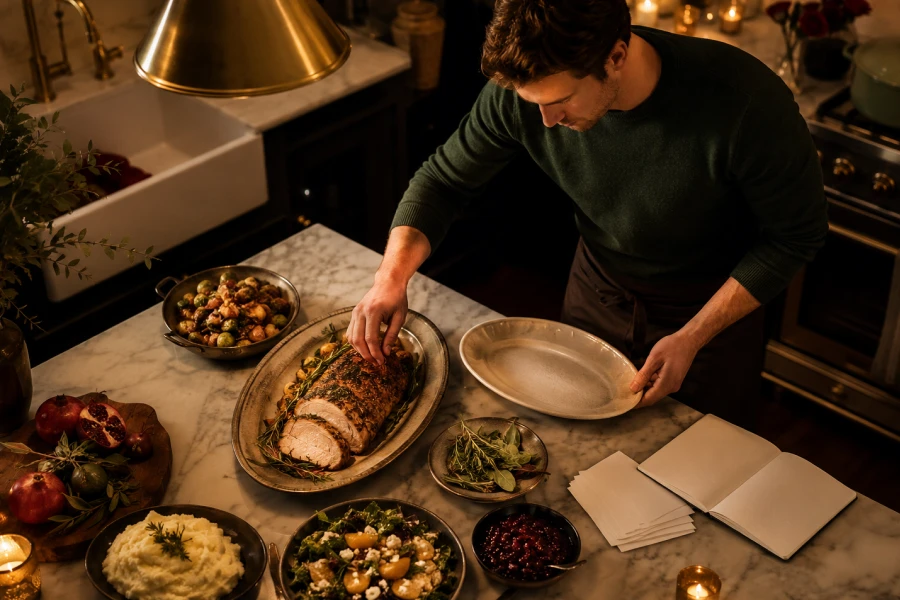
A memorable meal begins with more than a collection of favorite recipes. Holiday menu planning creates a rhythm that carries guests from arrival through dessert. It helps you choose dishes that belong together without becoming repetitive. A good menu balances familiar comfort with one small element of surprise. It also respects the limits of your time and kitchen. You do not need ten complicated recipes to make an impression. You need a clear idea of how each course supports the next. Thoughtful sequencing keeps preparation steady and service smooth. It helps guests feel cared for without noticing the work behind it. The best menus feel generous because they are intentionally balanced.
A theme gives your meal a useful center. It can be seasonal, regional, nostalgic, or built around one favorite ingredient. The theme should guide choices without turning dinner into a costume party. Think about the flavors and feelings you want people to remember. A winter meal may lean warm, rich, and aromatic. A brighter gathering might feature fresh herbs, citrus, and lighter textures. Begin with holiday hosting timeline and holiday dinner recipes when you need to turn a broad seasonal idea into a structured meal. A clear theme helps you edit unnecessary dishes. It also makes shopping feel much more focused. The menu becomes easier when every choice has a reason.
Holiday meals can become too heavy when every dish competes for attention. Balance rich foods with fresh, bright, or crisp elements. Pair creamy sauces with vegetables that have texture. Add something cool beside dishes that arrive piping hot. Think about color as well as flavor. A table looks more inviting when the menu has contrast. You can also balance labor by mixing one ambitious dish with several simple ones. Not every course needs a dramatic presentation. A calm combination often feels more luxurious than an overloaded spread. Variety gives each plate a chance to stand out. Restraint keeps the meal satisfying from the first bite to the last.
Oven space is one of the least glamorous but most important menu questions. Check cooking temperatures before you commit to multiple baked dishes. Choose recipes that can rest, reheat, or finish on the stovetop. Use room-temperature appetizers to reduce pressure. Keep one burner free for last-minute needs. Consider seasonal menu structure and family dinner atmosphere when you want a realistic plan for your kitchen. A menu should work with the tools you actually have. Timing becomes easier when you avoid competing cooking methods. Good logistics protect the quality of every dish. A practical kitchen plan creates a smoother dining room experience.
Each course should do something useful for the overall meal. An appetizer welcomes people and buys time before dinner. A main dish gives the table its center. Sides can provide contrast, color, and flexibility. Dessert offers a slower final note. Drinks can support the mood without becoming another task. Give every dish a reason to be there. Remove anything that only adds stress or duplicates another flavor. This approach keeps the menu readable for both cook and guest. It also makes serving simpler once everyone arrives. A thoughtful sequence feels effortless because each part supports the next.
Holidays are not always the right time for a table full of experiments. Favorite recipes bring confidence and emotional warmth. They also make it easier to estimate prep time and serving needs. Add one new idea if you want creative energy. Keep the rest dependable. Look to holiday table planning and comfort food menu ideas when you want familiar food to feel freshly presented. A known dish can become special through better timing or a beautiful serving bowl. Tradition gives guests something to recognize. Small updates keep the meal from feeling predictable. That balance lets comfort and novelty share the table.
A written sequence protects your attention on a busy day. List when each dish needs chopping, cooking, resting, or serving. Put the final tasks in order of urgency. Keep ingredients and equipment visible before you begin. Review the sequence once more before guests arrive. This simple document prevents forgotten steps from turning into last-minute stress. It also makes it easier for someone else to help. You can hand them one clear task without explaining the entire meal. A visible plan gives you confidence when the kitchen gets noisy. Good organization does not make a dinner feel rigid. It gives you the freedom to enjoy the people you invited.



Leave a comment